
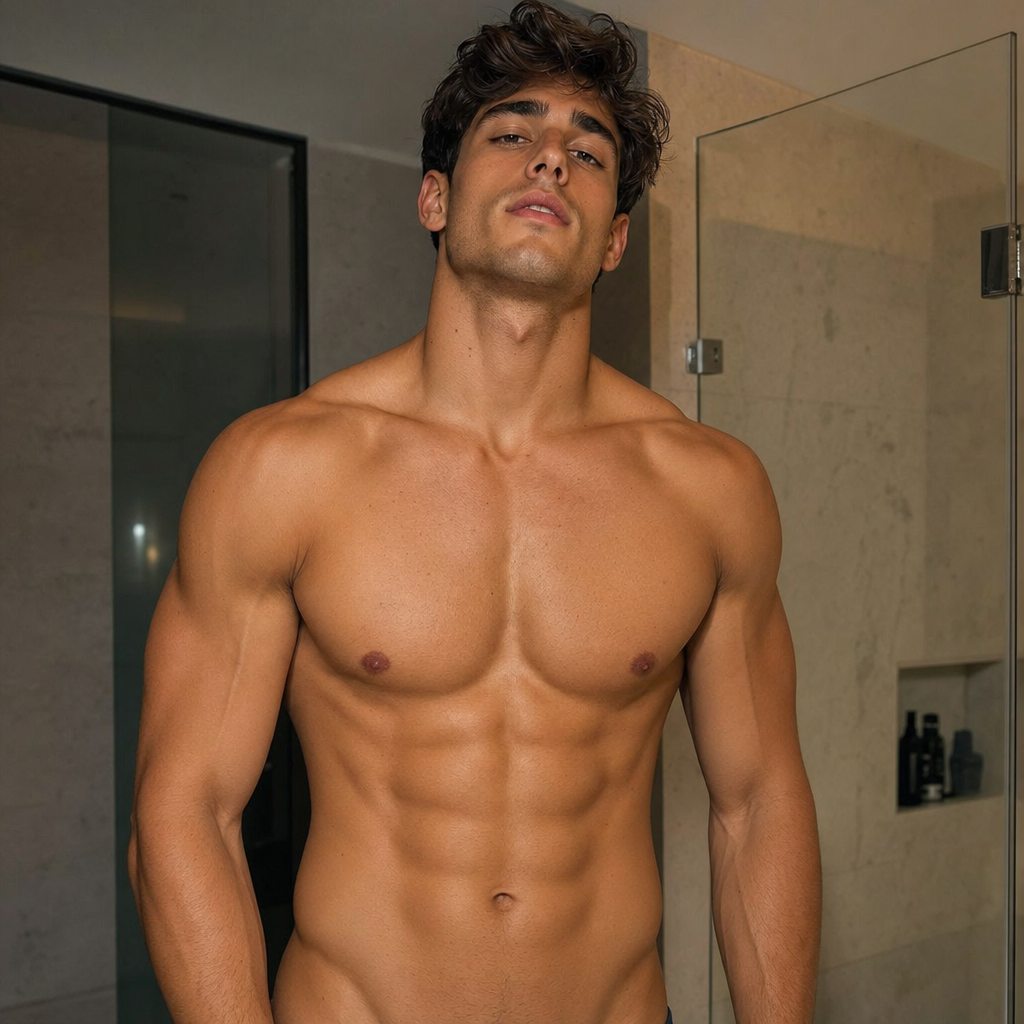
Most men who walk into a gym want some version of the same thing: broader shoulders, visible abs, bigger arms, a leaner waist, and the confidence that comes with looking good in a T-shirt.
There is nothing wrong with wanting to look better. In fact, physical transformation can be a powerful motivator. But after coaching men for over a decade, I can tell you this with confidence: training only for aesthetics often backfires.
The men who focus exclusively on looking attractive frequently become less confident, more injury-prone, more obsessed with food, and less capable in real life. Their bodies may look better under perfect lighting, but they often do not feel better, move better, or perform better.
That matters because attraction is not just visual. It is physical presence. It is energy. It is posture. It is confidence. It is the way you carry yourself when you walk into a room, play a sport, pick up your kids, move furniture, handle stress, or stay calm under pressure.
An **attractive male body** is not just lean and muscular. It is strong, healthy, capable, and sustainable.
If your training only helps you look good in a mirror but leaves you tired, stiff, hungry, anxious, or fragile, you are missing the bigger opportunity.
The goal is not to abandon aesthetics. The goal is to build them as a byproduct of becoming stronger, healthier, and more capable.
Why Aesthetics-Only Training Can Make Men Less Attractive
Aesthetics-focused training usually starts with good intentions. You want to improve your physique, so you search for the best chest workout, the fastest way to get abs, or the ideal “cutting diet.”
The issue is not the desire to improve your appearance. The issue is when appearance becomes the only measurement of progress.
When that happens, several problems tend to show up.
1. You Train Muscles, Not Movement
Many men who train for looks alone focus heavily on mirror muscles:
- Chest
- Biceps
- Shoulders
- Abs
- Quads
Again, these muscles matter. But if your program neglects the muscles and movement patterns that support posture, athleticism, and joint health, your body starts to look and feel imbalanced.
Commonly neglected areas include:
- Upper back
- Glutes
- Hamstrings
- Deep core
- Rotator cuff
- Calves
- Grip strength
- Hip mobility
The result? Rounded shoulders, tight hips, lower-back pain, stiff movement, and poor posture.
You might have bigger arms, but if you stand like you sit at a desk all day, you will not project strength. Strong posture is attractive. Smooth movement is attractive. Physical competence is attractive.
2. You Become Fragile Instead of Capable
A body built only through controlled machines, isolation work, and pump-focused training may look muscular, but that does not always translate into real-world strength.
Real life asks your body to:
- Hinge at the hips
- Carry awkward objects
- Rotate and resist rotation
- Squat and get up from the floor
- Push and pull from different angles
- Sprint, climb, brace, and balance
If your training never challenges these abilities, you may look fit but lack practical strength.
That gap can be frustrating. A man who looks strong but gets winded walking uphill, tweaks his back lifting luggage, or struggles to carry groceries in one trip does not feel very powerful.
The most attractive physique is one that can do something.
3. You Risk Developing an Unhealthy Relationship With Food
Aesthetics-only training often turns nutrition into a constant battle.
Many men fall into cycles like this:
- Eat aggressively to “bulk”
- Gain muscle but also a lot of fat
- Diet hard to “cut”
- Lose weight but feel weak and irritable
- Binge because the diet was too restrictive
- Start over again
This cycle can create anxiety around food. Instead of eating to fuel performance, recovery, energy, and health, every meal becomes a math problem or a guilt test.
You start asking:
- “Will this ruin my abs?”
- “How many calories do I need to burn this off?”
- “Can I eat carbs tonight?”
- “Do I look softer today?”
That mindset is exhausting. It also makes consistency harder.
A strong, healthy body requires nutrition you can live with. You should be able to enjoy meals, socialize, travel, and still maintain your results.
4. You Confuse Leanness With Health
Being lean can be healthy. But being as lean as possible is not always healthy.
Many men see fitness models, actors, or influencers at extremely low body fat and assume that is the standard. What they often do not see is the temporary and sometimes miserable process behind that look.
Very low body fat can come with trade-offs:
- Lower energy
- Poor sleep
- Reduced libido
- Mood swings
- Increased injury risk
- Obsession with food
- Poor training performance
- Weaker immune function
If your goal is to experience life with a strong and healthy body, you need to care about how your body functions, not just how it photographs.
The best physique is one you can maintain while still living well.
The Attractive Male Body Is Built on Function First
An attractive male body should communicate more than effort in the gym. It should communicate health, capability, and self-respect.
That kind of body is usually built on five foundations:
- Strength
- Muscle
- Conditioning
- Mobility
- Healthy nutrition habits
When these work together, aesthetics improve naturally.
You build muscle because you lift progressively. You get leaner because you move more and eat better. You stand taller because your back, core, and hips are stronger. You look more confident because you feel more capable.
This is the difference between training to look like you are in shape and training to actually be in shape.
Strength Changes How You Carry Yourself
One of the fastest ways to become more attractive is to get stronger.
Strength improves:
- Posture
- Confidence
- Bone density
- Joint stability
- Metabolism
- Work capacity
- Muscle growth
- Mental resilience
A man who squats, deadlifts, presses, rows, carries, and moves well develops a different presence. He tends to stand taller, walk more confidently, and handle physical tasks without hesitation.
That confidence is not fake. It comes from evidence. Every time you add weight to the bar, perform another rep, or master a difficult movement, you prove to yourself that you are capable of growth.
That carries into the rest of your life.
Key Strength Movements to Prioritize
You do not need a complicated program. You need to get good at the basics.
Build your training around these movement patterns:
- Squat: goblet squat, front squat, back squat, split squat
- Hinge: deadlift, Romanian deadlift, hip thrust, kettlebell swing
- Push: push-up, bench press, overhead press, dips
- Pull: pull-up, lat pulldown, dumbbell row, barbell row
- Carry: farmer’s carry, suitcase carry, front rack carry
- Core stability: plank, dead bug, Pallof press, ab wheel rollout
If you train these patterns consistently, your body will look better and perform better.
Muscle Still Matters — But Build It the Smart Way
Let’s be clear: muscle is a major part of an attractive physique. Broad shoulders, a strong back, developed legs, and a solid chest all help create the visual shape many men want.
But muscle should be built with balance.
A common mistake is overtraining the muscles you can see and undertraining the muscles that support them.
For example:
- Too much pressing and not enough pulling can lead to shoulder pain.
- Too much quad work and not enough hamstring work can create knee issues.
- Too much ab work and not enough deep core training can leave your spine unsupported.
- Too much arm isolation and not enough compound lifting can limit total-body development.
A smarter approach is to build muscle through a mix of compound lifts and targeted accessory work.
A Balanced Muscle-Building Template
Use this structure for most workouts:
1. Main strength lift
Example: squat, deadlift, bench press, overhead press
2. Secondary compound lift
Example: Romanian deadlift, incline dumbbell press, pull-up, split squat
3. Upper-back or posterior-chain work
Example: rows, face pulls, hip thrusts, hamstring curls
4. Accessory work
Example: lateral raises, curls, triceps extensions, calf raises
5. Core or carry finisher
Example: farmer’s carries, planks, Pallof presses
This approach builds the kind of body that looks good from every angle and performs well outside the gym.
Conditioning Makes You Look and Feel More Alive
Many men avoid conditioning because they fear it will “kill their gains.” In reality, smart conditioning supports muscle growth, fat loss, heart health, and recovery.
A man with great conditioning has better energy, stamina, and mental sharpness. He can train harder, recover faster, and enjoy life more fully.
There is also something visibly attractive about being fit. You move differently. You breathe better. You do not look exhausted from basic activity.
The Two Types of Conditioning You Need
For the best results, include both low-intensity and high-intensity conditioning.
Low-Intensity Conditioning
This builds your aerobic base and supports recovery.
Good options include:
- Brisk walking
- Cycling
- Hiking
- Easy rowing
- Swimming
- Incline treadmill walking
Aim for 2–4 sessions per week, 25–45 minutes each.
This does not need to crush you. You should be able to hold a conversation while doing it.
High-Intensity Conditioning
This improves power, toughness, and athletic capacity.
Good options include:
- Hill sprints
- Sled pushes
- Bike intervals
- Rowing intervals
- Kettlebell circuits
- Battle ropes
Aim for 1–2 sessions per week, depending on your recovery.
Keep these short and focused. More is not always better.
Example:
- 8 rounds of 20 seconds hard, 100 seconds easy on a bike
- 6 hill sprints with full recovery
- 10 minutes of sled pushes with moderate rest
Conditioning should improve your life, not bury you.
Mobility and Posture Are Underrated Attraction Multipliers
You can have muscle and still move poorly. You can be lean and still look stiff. You can bench heavy and still have shoulders that round forward all day.
Mobility and posture matter because they influence how your body presents itself.
Good posture communicates confidence and strength. Efficient movement communicates athleticism and ease.
Most men do not need an hour of stretching per day. They need a few targeted habits done consistently.
Daily Mobility Priorities
Focus on areas that get tight from sitting, lifting, and modern life:
- Hip flexors
- Hamstrings
- Ankles
- Thoracic spine
- Pecs
- Lats
- Neck
Try this simple 8-minute daily routine:
- Couch stretch – 1 minute per side
- Deep squat hold – 1 minute
- Thoracic rotations – 10 reps per side
- Wall slides – 10 reps
- Dead bugs – 10 reps per side
- Glute bridges – 15 reps
Do this before training, after work, or before bed. The goal is not perfection. The goal is to remind your body how to move well.
Nutrition: Fuel the Body You Want to Live In
If you want to build an attractive male body, your nutrition needs to support more than fat loss. It needs to support training performance, hormones, digestion, sleep, recovery, and long-term health.
The best diet is not the one you can follow for 21 days. It is the one that helps you perform, feel good, and stay consistent for years.
Start With the Basics
Before worrying about advanced strategies, master these fundamentals:
- Eat protein at most meals.
- Eat fruits and vegetables daily.
- Choose mostly minimally processed foods.
- Drink enough water.
- Include carbohydrates around hard training.
- Eat healthy fats for hormones and satiety.
- Limit alcohol if it disrupts sleep, recovery, or consistency.
Protein: Your Foundation for Muscle and Recovery
Protein supports muscle growth, recovery, satiety, and body composition.
Aim for:
- 0.7–1 gram of protein per pound of goal body weight per day
High-quality protein sources include:
- Eggs
- Greek yogurt
- Chicken
- Turkey
- Lean beef
- Fish
- Whey or plant protein powder
- Tofu
- Lentils
- Cottage cheese
A simple goal: include a palm-sized serving of protein at each meal.
Carbs Are Not the Enemy
Many men trying to look better cut carbs too aggressively. This can work short term, but it often hurts training performance and mood.
Carbs fuel hard training. They help you lift heavier, sprint faster, and recover better.
Good carbohydrate sources include:
- Potatoes
- Rice
- Oats
- Fruit
- Beans
- Whole-grain bread
- Quinoa
- Pasta in appropriate portions
Place more carbs around your workouts and on harder training days.
Fats Support Hormones and Health
Dietary fat is important for hormone production, brain health, and satiety.
Good sources include:
- Olive oil
- Avocado
- Nuts
- Seeds
- Whole eggs
- Fatty fish
- Dark chocolate in moderation
Do not eliminate fats to chase faster fat loss. Extremely low-fat diets are rarely sustainable and can make you feel worse.
Stop Chasing the Perfect Body Fat Percentage
A lot of men think they will finally be confident once they hit a specific body fat percentage.
Maybe it is 10%. Maybe it is visible abs. Maybe it is a certain scale weight.
But confidence built only on leanness is fragile. It disappears after one salty meal, one missed workout, or one bad mirror check.
Instead of chasing the leanest version of yourself, aim for your strongest sustainable version.
Ask better questions:
- Do I have energy throughout the day?
- Am I sleeping well?
- Is my libido healthy?
- Am I getting stronger?
- Can I enjoy meals without guilt?
- Do I like how I move?
- Can I maintain this lifestyle year-round?
A healthy, capable body will usually settle into a lean, athletic look when your habits are consistent.
That is far more attractive than constantly suffering to stay photo-ready.
Confidence Comes From Keeping Promises to Yourself
Aesthetics can improve confidence, but only temporarily if the process behind them is unhealthy.
Real confidence comes from self-trust.
Every time you do what you said you would do, you build that trust.
That might mean:
- Training three times per week even when life is busy
- Preparing a high-protein breakfast instead of skipping meals
- Going for a walk instead of scrolling for an hour
- Stopping a set before your form breaks down
- Choosing sleep instead of another drink
- Eating enough instead of crash dieting
These actions may not seem dramatic, but they compound.
Over time, you become the kind of man who can rely on himself. That shows up in your body language, your decisions, your relationships, and your work.
Attraction is not only about what people see. It is also about what they sense.
A Practical Weekly Training Plan
Here is a simple four-day structure that builds strength, muscle, conditioning, and movement quality.
Day 1: Lower-Body Strength
- Back squat or front squat: 4 sets of 3–6 reps
- Romanian deadlift: 3 sets of 6–10 reps
- Walking lunge: 3 sets of 8–12 reps per side
- Hamstring curl: 3 sets of 10–15 reps
- Plank: 3 sets of 30–60 seconds
- Optional: 10–20 minutes easy cardio
Day 2: Upper-Body Strength
- Bench press: 4 sets of 3–6 reps
- Pull-up or lat pulldown: 4 sets of 6–10 reps
- Overhead press: 3 sets of 6–10 reps
- Dumbbell row: 3 sets of 8–12 reps
- Face pull: 3 sets of 12–20 reps
- Farmer’s carry: 4 rounds of 30–60 seconds
Day 3: Conditioning and Mobility
- Brisk walk, bike, or row: 30–45 minutes
- Mobility routine: 8–12 minutes
- Optional core work: dead bugs, side planks, Pallof presses
Day 4: Full-Body Muscle
- Deadlift or trap-bar deadlift: 3 sets of 3–6 reps
- Incline dumbbell press: 3 sets of 8–12 reps
- Bulgarian split squat: 3 sets of 8–12 reps per side
- Seated cable row: 3 sets of 10–12 reps
- Lateral raise: 3 sets of 12–20 reps
- Curls and triceps extensions: 2–3 sets each
- Sled push or bike intervals: 8–12 minutes
This kind of program builds the visual qualities most men want while also improving performance and durability.
Habits That Make Your Physique More Sustainable
Training hard matters, but your daily habits determine whether your results last.
Focus on these high-return habits:
Walk More
Walking is underrated for fat loss, recovery, stress management, and cardiovascular health.
Aim for:
- 7,000–10,000 steps per day
If that feels like a lot, start by adding a 10-minute walk after two meals per day.
Sleep Like It Matters
Poor sleep makes everything harder:
- Hunger increases
- Cravings rise
- Testosterone may drop
- Recovery suffers
- Motivation decreases
- Training performance declines
Aim for 7–9 hours of quality sleep.
Helpful habits:
- Keep a consistent sleep schedule
- Stop caffeine 8–10 hours before bed
- Dim lights at night
- Keep the room cool
- Avoid heavy alcohol intake
- Get sunlight early in the day
Manage Stress Before It Manages You
High stress can lead to overeating, poor sleep, skipped workouts, and low energy.
Use simple stress tools:
- Daily walks
- Breathwork
- Journaling
- Time outdoors
- Lifting with good form
- Setting boundaries with work
- Taking real rest days
A calm nervous system supports a stronger body.
What to Track Besides the Mirror
The mirror can be useful, but it should not be your only feedback tool.
Track performance and health markers too.
Good metrics include:
- Strength numbers
- Resting heart rate
- Waist measurement
- Energy levels
- Sleep quality
- Step count
- Workout consistency
- Mood
- Digestion
- Recovery
- Progress photos every 4–6 weeks
When you track more than appearance, you make better decisions.
For example, if your scale weight is dropping but your sleep is terrible, your lifts are falling, and your mood is poor, you may be dieting too aggressively.
If your weight is stable but your waist is smaller, your strength is up, and your shirts fit better, you are probably making excellent progress.
The Real Goal: Look Good Because You Live Well
The most attractive men I have coached are not the ones who obsess the most. They are the ones who build reliable systems.
They train hard, but they do not punish themselves. They eat well, but they are not afraid of dinner with friends. They care about their physique, but they care more about being strong, energetic, capable, and healthy.
That is the difference.
Aesthetics alone can make you dependent on validation. Strength gives you self-respect. Health gives you energy. Capability gives you confidence. Consistency gives you freedom.
If you want an attractive male body, do not chase the narrowest version of the goal. Build a body that can lift, carry, run, recover, sleep, work, play, and age well.
The physique will follow.
Start with three simple actions this week:
- Strength train three to four times using compound movements.
- Eat protein and plants at most meals.
- Walk daily and prioritize sleep.
Do that consistently, and you will not just look better.
You will become stronger, healthier, more confident, and more attractive in the ways that actually last.