
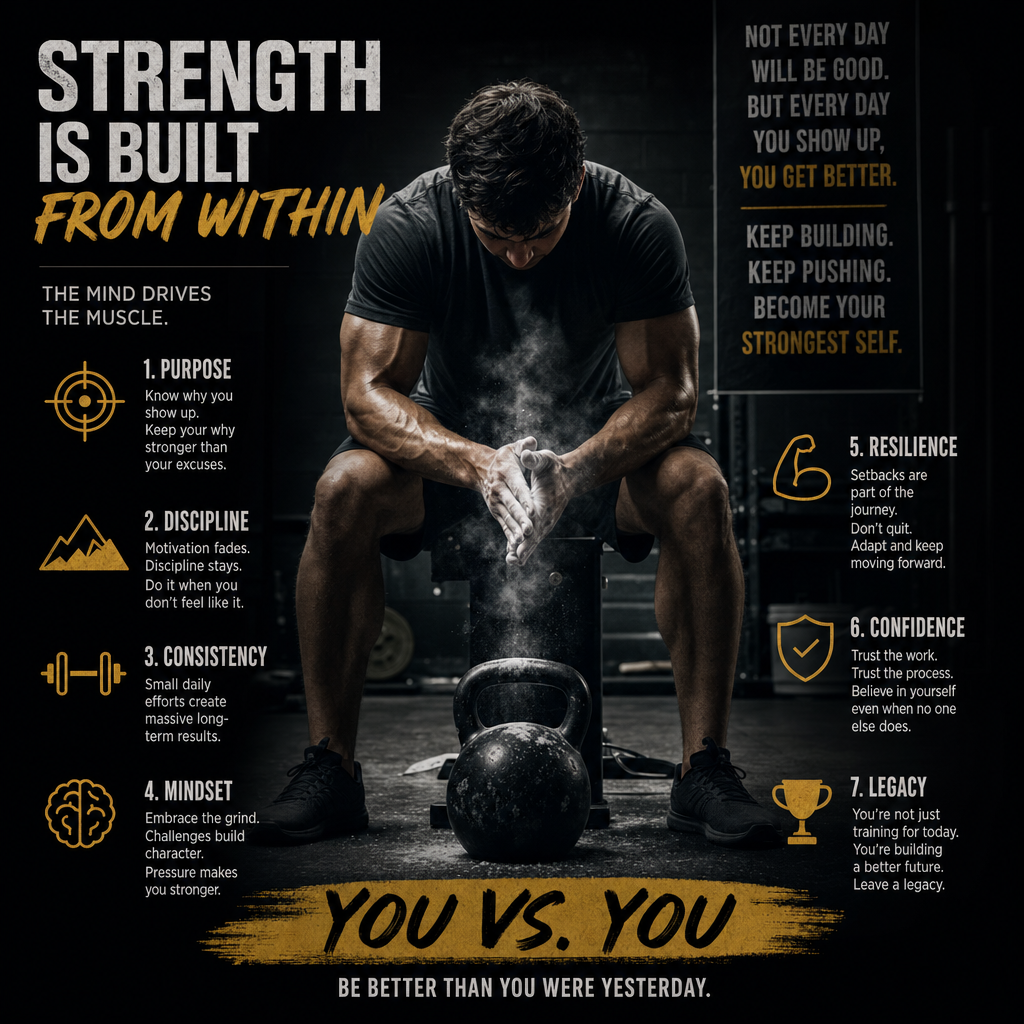
If you’ve ever followed a solid strength training program, you already understand one of the most powerful success principles in life: progressive overload.
In the gym, progressive overload means gradually increasing the challenge on your body so it adapts. You add a little more weight, perform one more rep, improve your technique, increase your range of motion, or recover better between sessions. Over time, those small increases lead to real strength, muscle, confidence, and resilience.
But progressive overload is not just a training method. It is a way to approach life.
The same principles that help you build a stronger squat, deadlift, or push-up can help you build a better business, stronger relationships, healthier habits, and more personal discipline. This is where the strength training mindset becomes valuable far beyond the gym.
When you learn how to challenge yourself intelligently, recover intentionally, and stay consistent long enough to adapt, you become harder to break in every area of life.
What Progressive Overload Really Means
Progressive overload is often simplified as “just lift heavier.” While adding weight is one form of progression, it is not the whole picture.
In strength training, you can create progressive overload by improving:
- Load: Lifting more weight
- Reps: Doing more repetitions with the same weight
- Sets: Adding more total work
- Tempo: Slowing down the movement to increase time under tension
- Range of motion: Moving through a fuller, more controlled pattern
- Technique: Performing the exercise with better skill and efficiency
- Frequency: Training a muscle or movement more often
- Recovery: Sleeping, eating, and managing stress better so you can perform at a higher level
The key is gradual, intentional challenge.
Too little challenge, and nothing changes. Too much challenge, and you break down. The sweet spot is enough stress to force adaptation, but not so much that you cannot recover.
That same rule applies to nearly everything worth improving.
If you want to build a stronger body, grow a business, improve your confidence, or change unhealthy habits, you need a system that stretches you without overwhelming you.
Why the Strength Training Mindset Works Outside the Gym
A strength training mindset teaches you that growth is earned through repeated effort, not random motivation.
Most people want transformation, but they underestimate the role of structure. They want more energy, better health, more income, deeper confidence, or more discipline. But they approach those goals emotionally instead of strategically.
Strength training changes that.
When you train consistently, you learn several important truths:
- Results take time.
- Small improvements matter.
- Recovery is productive.
- Hard days are part of the process.
- Tracking progress creates clarity.
- You do not need to feel motivated to show up.
- Adaptation happens after repeated exposure to challenge.
That mindset is powerful because life does not reward occasional intensity as much as it rewards consistent execution.
Anyone can go hard for a week. Fewer people can stay consistent for six months. Even fewer can stay consistent for years. But those who do usually separate themselves from the crowd.
The Progressive Overload Formula for Life
Progressive overload can be applied to almost any goal using a simple formula:
- Choose the area you want to improve.
- Identify your current baseline.
- Add a small, manageable challenge.
- Practice consistently.
- Recover and reflect.
- Increase the challenge when you are ready.
This is how you avoid the all-or-nothing trap.
For example, if you currently do not exercise, going from zero workouts to six intense sessions per week is probably too much. You may feel excited at first, but soreness, fatigue, and schedule stress will likely catch up with you.
A progressive overload approach would look more like this:
- Week 1-2: Walk 20 minutes three times per week.
- Week 3-4: Add two short strength sessions.
- Week 5-6: Increase strength training to three days per week.
- Week 7-8: Add more challenging exercises or heavier weights.
The same works with nutrition.
Instead of attempting a complete diet overhaul overnight, you might start by:
- Drinking more water
- Eating protein at breakfast
- Adding vegetables to one meal per day
- Reducing late-night snacking
- Planning lunches ahead of time
- Tracking food intake for awareness
Small steps create buy-in. Buy-in creates consistency. Consistency creates results.
Applying Progressive Overload to Health and Fitness
The most obvious place to apply progressive overload is your body.
If your goal is to experience life with a strong and healthy body, your training needs to be progressive. Random workouts can make you sweat, but structured progression makes you better.
Build Strength Gradually
A strong body gives you more than muscle. It gives you options.
When you build strength, everyday life becomes easier. Carrying groceries, climbing stairs, playing with your kids, moving furniture, hiking on vacation, or simply getting off the floor all become less demanding.
To apply progressive overload in your workouts:
- Keep a training log.
- Track exercises, sets, reps, and weights.
- Aim to improve one variable at a time.
- Prioritize good form before heavier loads.
- Repeat key movements long enough to improve them.
- Avoid changing your entire workout every week.
A simple example:
If you goblet squat 40 pounds for 3 sets of 8 reps, your next goals might be:
- 3 sets of 9 reps
- 3 sets of 10 reps
- 45 pounds for 3 sets of 8 reps
- Better depth and control with the same weight
Progress does not always need to be dramatic. In fact, the best progress usually is not.
Improve Nutrition One Habit at a Time
Many people fail with nutrition because they try to fix everything at once.
They cut calories aggressively, remove entire food groups, start meal prepping, eliminate sugar, quit alcohol, increase protein, and track every bite all in the same week. That may work briefly, but it often creates burnout.
Use progressive overload instead.
Start with one nutrition habit that gives you the biggest return. For many people, that is protein.
Try this:
- Eat a palm-sized serving of protein at each meal.
- Build breakfast around eggs, Greek yogurt, cottage cheese, protein powder, tofu, or lean meat.
- Keep simple protein options available.
- Add protein before removing foods.
Once that feels natural, progress to another habit, such as:
- Eating 25-35 grams of fiber per day
- Drinking 2-3 liters of water
- Eating vegetables at two meals
- Planning meals three days ahead
- Reducing ultra-processed snacks at home
The goal is not perfection. The goal is making healthy behaviors easier to repeat.
Upgrade Recovery Like It Matters
In training, adaptation does not happen during the workout. It happens after the workout when your body repairs and rebuilds.
The same is true in life.
If you are always pushing without recovery, you are not building resilience. You are accumulating fatigue.
Recovery includes:
- Sleep
- Nutrition
- Hydration
- Mobility
- Stress management
- Time outdoors
- Social connection
- Quiet time away from screens
If you want better results from your workouts and your life, treat recovery as part of the plan, not a reward you earn after exhaustion.
Action step: Choose one recovery habit to improve this week.
Examples:
- Go to bed 30 minutes earlier.
- Take a 10-minute walk after lunch.
- Stretch for five minutes before bed.
- Stop caffeine after noon.
- Keep your phone out of the bedroom.
- Schedule one evening with no work tasks.
Better recovery improves performance, mood, decision-making, appetite control, and motivation. It is one of the highest-return investments you can make.
Applying Progressive Overload to Business and Career Growth
Business growth and strength training have a lot in common.
In both, people often overestimate what they can do in a week and underestimate what they can build in a year.
A business or career does not grow because you occasionally work 14-hour days. It grows because you consistently improve skills, systems, relationships, and decision-making.
Increase Capacity Without Creating Burnout
Just like your body has a training capacity, your work life has a performance capacity.
If you suddenly double your workload without better systems, you may create stress, mistakes, and burnout. But if you gradually increase your capacity while improving your skills and processes, growth becomes sustainable.
For example, if you are building a business, progressive overload might look like:
- Making 5 sales calls per week, then 10, then 15
- Posting one high-quality piece of content per week, then two
- Improving your offer before increasing ad spend
- Delegating one recurring task per month
- Reading 10 pages per day instead of trying to finish a book overnight
- Practicing public speaking in small meetings before large presentations
The principle is the same: increase the challenge at a rate you can adapt to.
Track the Right Metrics
In the gym, if you do not track your lifts, it is hard to know if you are actually getting stronger.
In business, if you do not track the right metrics, it is hard to know what is working.
Depending on your role or business, useful metrics may include:
- Revenue
- Profit
- Leads generated
- Sales conversations
- Client retention
- Email open rates
- Customer satisfaction
- Projects completed
- Hours spent on deep work
- Skills practiced
The goal is not to obsess over numbers. The goal is to create feedback.
Feedback helps you make better decisions. It shows you when to push, when to adjust, and when to recover.
Build Skills Like You Build Muscle
You do not build muscle by training once. You build muscle by repeated exposure to tension.
Skills work the same way.
Whether you want to improve leadership, sales, communication, writing, negotiation, or time management, you need reps.
To apply the strength training mindset to skill development:
- Choose one skill to focus on for 30-90 days.
- Break it into smaller components.
- Practice deliberately.
- Get feedback from someone qualified.
- Increase the difficulty over time.
- Review your progress weekly.
For example, if you want to become a better communicator, you could progress like this:
- Week 1: Pause before responding in conversations.
- Week 2: Ask better follow-up questions.
- Week 3: Summarize what the other person said before giving your opinion.
- Week 4: Practice presenting one idea clearly in meetings.
- Week 5: Record yourself explaining a concept and review it.
- Week 6: Ask for feedback from a colleague or mentor.
That is progressive overload for communication.
Small, deliberate practice repeated over time can transform your career.
Applying Progressive Overload to Personal Growth
Personal growth often fails because people try to become a completely different person overnight.
They decide that starting Monday, they will wake up at 5 a.m., meditate, journal, work out, eat clean, read, stop procrastinating, save money, and become endlessly positive.
That sounds inspiring, but it is usually too much too soon.
A better approach is to build identity through progressive proof.
Every time you keep a small promise to yourself, you reinforce a stronger identity. You become the kind of person who follows through.
Build Confidence Through Evidence
Confidence is not something you magically wake up with. Confidence is built through evidence.
You earn confidence when you repeatedly do what you said you would do.
If you want to feel more confident, start by setting promises you can keep.
Examples:
- “I will train twice this week.”
- “I will drink water before coffee.”
- “I will walk for 10 minutes after dinner.”
- “I will prepare lunch tomorrow.”
- “I will spend 15 minutes on the project I have been avoiding.”
These may seem small, but they matter.
When you keep small promises, your brain starts to believe you. That belief becomes momentum. Momentum becomes confidence.
Increase Discomfort Gradually
Growth requires discomfort, but not all discomfort is productive.
There is a big difference between challenging yourself and constantly overwhelming yourself.
Progressive overload teaches you to work at the edge of your current capacity.
In personal growth, that might mean:
- Speaking up once in a meeting
- Having one difficult conversation
- Setting one boundary
- Trying one new fitness class
- Going to a social event for 30 minutes
- Asking for help
- Saying no without overexplaining
- Taking responsibility for one mistake
Each small act expands your comfort zone.
You do not need to become fearless. You need to become practiced.
Create Systems Instead of Relying on Motivation
Motivation is useful, but it is unreliable.
Systems are more dependable.
A system is a structure that makes the desired behavior easier to repeat. In strength training, a system might include a program, scheduled workouts, a gym bag packed the night before, and a training log.
In life, systems might include:
- Automatic savings transfers
- Meal planning every Sunday
- Calendar blocks for focused work
- A bedtime routine
- A morning checklist
- A weekly review
- Keeping workout clothes visible
- Removing trigger foods from the house
- Scheduling recurring walks with a friend
A good system reduces friction.
The less friction there is, the less motivation you need.
The Role of Deloads in Life
One of the most overlooked parts of strength training is the deload.
A deload is a planned reduction in training intensity or volume. You do not stop completely. You simply reduce stress so your body can recover and come back stronger.
Life needs deloads too.
If you are constantly pushing at maximum effort, your performance will eventually drop. You may become irritable, tired, unfocused, or unmotivated. You may crave more junk food, skip workouts, sleep poorly, or feel emotionally reactive.
That does not mean you are weak. It means you are under-recovered.
Signs You May Need a Life Deload
Consider pulling back temporarily if you notice:
- Poor sleep
- Loss of motivation
- Constant soreness or fatigue
- Increased cravings
- Irritability
- Brain fog
- Declining workout performance
- Avoiding tasks you normally handle
- Feeling overwhelmed by simple decisions
A life deload might include:
- Reducing training intensity for a week
- Taking a long weekend off work
- Canceling nonessential commitments
- Doing lighter workouts
- Prioritizing sleep
- Eating simple, nourishing meals
- Spending less time on social media
- Taking walks instead of high-intensity sessions
The purpose of a deload is not to quit. It is to recover so you can continue.
High performers understand this. They do not confuse rest with laziness. They use rest strategically.
How to Know When to Increase the Challenge
One of the most important skills in training and life is knowing when to progress.
Increase the challenge when:
- Your current habit feels manageable.
- You can perform it consistently.
- Your recovery is stable.
- Your technique or process is solid.
- You are no longer improving from the same stimulus.
- You feel ready for a small step forward.
Avoid increasing the challenge when:
- You are barely hanging on.
- Your sleep is poor.
- Your stress is unusually high.
- Your form or process is sloppy.
- You are progressing only because of ego.
- You keep missing the basics.
In fitness, this may mean staying at the same weight until your reps are clean.
In business, it may mean improving fulfillment before taking on more clients.
In personal growth, it may mean strengthening one habit before adding three more.
Progression should be earned, not forced.
Common Mistakes That Slow Progress
Progressive overload is simple, but simple does not always mean easy. Here are common mistakes to avoid.
Doing Too Much Too Soon
This is the most common mistake.
People get excited and try to change everything at once. Then life gets busy, soreness sets in, stress rises, and the plan falls apart.
Better approach: Start smaller than your ego wants. Build consistency first.
Changing the Plan Too Often
In the gym, program hopping prevents you from measuring progress. In life, constantly changing goals prevents meaningful growth.
Better approach: Give your plan enough time to work. Stay consistent for at least 4-6 weeks before making major changes.
Ignoring Recovery
If you train hard, work hard, and sleep poorly, your results will eventually suffer.
Better approach: Treat sleep, nutrition, and downtime as performance tools.
Confusing Motion With Progress
Being busy is not the same as improving.
A long workout is not always a better workout. A packed calendar is not always a productive calendar.
Better approach: Track meaningful outcomes, not just effort.
Letting Perfection Ruin Consistency
Many people miss one workout or eat one off-plan meal and decide the week is ruined.
That mindset keeps people stuck.
Better approach: Return to the next best action quickly. One imperfect moment does not cancel your progress.
A Practical Weekly Framework
If you want to apply progressive overload to your life starting this week, use this simple framework.
1. Choose One Main Focus
Pick one area:
- Strength training
- Nutrition
- Sleep
- Career
- Finances
- Relationships
- Confidence
- Stress management
Do not overload your life with too many goals at once.
2. Establish Your Baseline
Ask yourself:
- Where am I right now?
- What am I currently doing consistently?
- What is not working?
- What feels realistic?
Be honest without judgment. Your baseline is not a personal failure. It is your starting point.
3. Add One Small Challenge
Choose one action that is slightly above your current norm.
Examples:
- Add one workout per week.
- Add 10 pounds to a lift if your form is strong.
- Walk 2,000 more steps per day.
- Eat protein at breakfast.
- Go to bed 20 minutes earlier.
- Spend 30 minutes per day on a business skill.
- Have one conversation you have been avoiding.
4. Track It
Keep it simple.
Use:
- A notebook
- A spreadsheet
- A habit app
- A calendar
- A notes app
Track completion, not perfection.
5. Review Weekly
At the end of the week, ask:
- What improved?
- What felt hard?
- What got in the way?
- What should stay the same?
- What should change?
- Am I ready to progress?
This review process turns experience into wisdom.
The Benefits You Can Expect
When you apply progressive overload beyond the gym, you can expect benefits that compound over time.
Physically, you may notice:
- More strength
- Better posture
- Improved energy
- Healthier body composition
- Better mobility
- More confidence in your body
- Greater resilience during daily tasks
Mentally and emotionally, you may notice:
- More discipline
- Less anxiety from having a plan
- Better self-trust
- Improved focus
- More patience
- Greater emotional control
- Higher confidence
Professionally, you may notice:
- Better productivity
- Stronger leadership
- More consistent execution
- Improved decision-making
- Increased earning potential
- Better communication
- More sustainable ambition
The best part is that these benefits reinforce each other.
When you train your body, you often make better food choices. When you eat better, you sleep better. When you sleep better, you think more clearly. When you think more clearly, you perform better at work. When you perform better at work, you feel more confident. When you feel more confident, you are more likely to keep showing up.
That is the compound effect of the strength training mindset.
Final Thoughts: Apply the Strength Training Mindset to Your Daily Life
Progressive overload is not just about lifting heavier weights. It is about becoming the kind of person who adapts.
You do not need to overhaul your entire life this week. You need to identify the next right challenge and meet it consistently.
Build your body one workout at a time.
Build your nutrition one meal at a time.
Build your business one skill, system, and conversation at a time.
Build your confidence one kept promise at a time.
The strength training mindset reminds you that growth is not random. It is trained. It is practiced. It is earned through small, repeated efforts that gradually expand your capacity.
Start where you are. Add the right amount of challenge. Recover well. Track your progress. Then repeat.
That is how you get stronger in the gym, in business, and in life.