
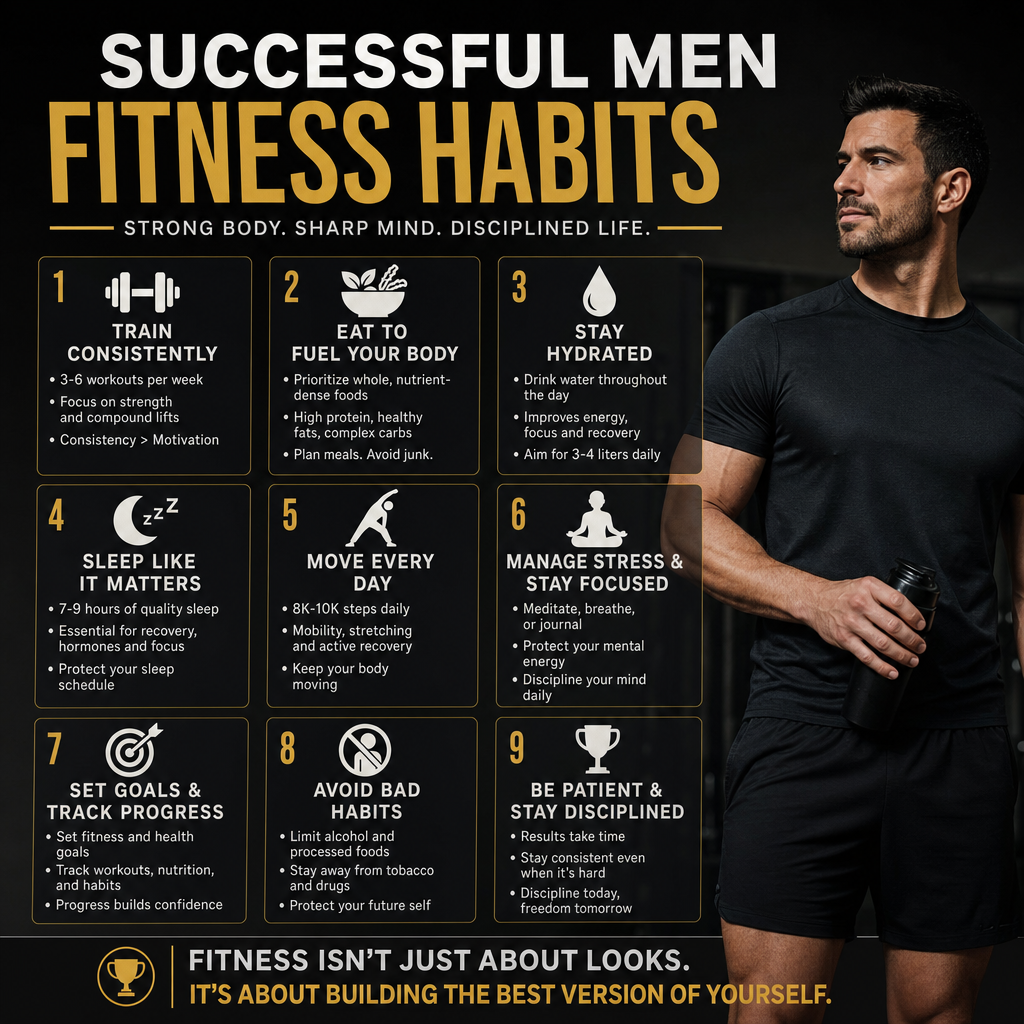
If you study men who build wealth and maintain strong, healthy bodies, you’ll notice something important: they do not treat fitness as a side project. They treat it as part of their operating system.
They may have different careers, backgrounds, schedules, and training styles, but the psychology is often similar. They understand that energy, discipline, confidence, and resilience are business assets. A strong body supports a sharp mind. A healthy routine protects them from burnout. Fitness is not just about looking good in a suit or on vacation. It is about performing well, leading with presence, and staying capable for decades.
As a strength and nutrition coach, I’ve worked with busy professionals, entrepreneurs, executives, parents, tradesmen, and high performers across many industries. The men who make lasting progress usually are not the ones with the most free time. They are the ones who build repeatable systems, manage their environment, and make health part of their identity.
Let’s break down the psychology behind men who get rich and stay fit — and how you can apply the same mindset to your own life.
Why Wealth and Fitness Often Share the Same Mental Foundation
Building wealth and building a strong body are different pursuits, but they reward many of the same traits:
- Patience
- Consistency
- Delayed gratification
- Strategic decision-making
- Emotional control
- Long-term thinking
- Personal responsibility
You do not get rich from one good business decision, just like you do not get fit from one great workout. Results come from repeated behavior over time.
Successful men tend to understand compounding. They know that small actions, repeated consistently, create major results. In finance, that may mean investing regularly, controlling spending, or building valuable skills. In fitness, it means lifting weights, eating enough protein, sleeping well, walking daily, and managing stress.
The difference is not magic. It is psychology turned into behavior.
Successful Men Fitness Habits Start With Identity
One of the most powerful shifts a man can make is moving from “I’m trying to get fit” to “I’m the kind of man who trains.”
That sounds simple, but it changes everything.
When fitness is tied to identity, you stop negotiating with yourself every day. Training becomes something you do because it matches who you are. You do not need to feel motivated every morning. You do not need perfect circumstances. You act in alignment with your standards.
This is one of the core principles behind successful men fitness habits: they do not rely on mood. They rely on identity and systems.
Instead of saying:
- “I hope I can work out this week.”
- “I’ll eat better when work slows down.”
- “I need to get motivated again.”
They think:
- “Training is part of my schedule.”
- “My body is a business asset.”
- “I keep promises to myself.”
- “I don’t let temporary stress destroy long-term progress.”
Actionable tip: Create your fitness identity statement
Write one sentence that defines the kind of man you are becoming.
Examples:
- “I am a strong, disciplined man who trains four days per week.”
- “I take care of my body because my family, career, and future depend on it.”
- “I eat like someone who respects his health and performance.”
Read it every morning for 30 days. Then back it up with one daily action.
They Value Energy More Than Entertainment
Many men say they want to be fit, but their habits show they value comfort more than energy. They stay up late watching shows, scroll their phone in bed, skip breakfast, grab fast food, and then wonder why they feel drained by 2 p.m.
Men who stay fit are not perfect. They enjoy food, drinks, travel, and social events. But they understand trade-offs.
They know:
- Poor sleep lowers testosterone, focus, and impulse control.
- Heavy drinking damages recovery and decision-making.
- A sedentary lifestyle reduces energy and confidence.
- Processed foods make it harder to control appetite.
- Chronic stress eventually shows up in the body.
A high-performing life requires high-quality energy. If you want to lead teams, build a business, raise a family, and still have drive left at the end of the day, your health habits matter.
Actionable tip: Track your energy, not just your weight
For one week, rate your energy from 1 to 10 at three points each day:
- Morning
- Afternoon
- Evening
Next to each rating, write what influenced it:
- Sleep quality
- Meals
- Training
- Caffeine
- Alcohol
- Stress
- Screen time
- Hydration
You’ll quickly notice patterns. Maybe your “normal” afternoon crash is not normal at all. It may be the result of poor sleep, low protein, too much sugar, or dehydration.
The goal is not to obsess. The goal is to become aware.
They Schedule Fitness Like a Business Meeting
Busy men often make the mistake of trying to “fit in” workouts whenever they have time. That rarely works because important tasks expand to fill the day. If training is not scheduled, it becomes optional.
Men who stay fit put workouts on the calendar. They treat training like an appointment with a top client — because in many ways, it is. Your future self is the client.
You do not need two hours a day. Most men can build impressive strength and conditioning with three to five focused sessions per week.
A practical weekly structure might look like this:
- Monday: Upper-body strength
- Tuesday: Walk or conditioning
- Wednesday: Lower-body strength
- Thursday: Mobility and easy cardio
- Friday: Full-body strength
- Saturday: Outdoor activity, sport, or longer walk
- Sunday: Rest and meal prep
The exact plan depends on your goals, training age, injury history, and schedule. But the principle remains the same: decide in advance.
Actionable tip: Use the “minimum effective workout”
On your busiest days, do not skip completely. Use a short workout to maintain momentum.
Example 20-minute full-body session:
- Push-ups or dumbbell bench press: 3 sets
- Goblet squats: 3 sets
- Dumbbell rows: 3 sets
- Romanian deadlifts: 3 sets
- Plank: 3 rounds
Keep the rest periods short. Focus on quality. Walk away knowing you kept the habit alive.
Consistency beats perfection.
They Build Discipline Through Small Wins
Discipline is not something you either have or do not have. Discipline is trained.
Every time you keep a promise to yourself, you build evidence that you are reliable. Every time you break that promise, you weaken your self-trust.
This does not mean you need to live like a robot. It means your standards matter.
A wealthy man does not usually become successful by making one huge sacrifice. He builds the habit of doing what needs to be done, even when it is inconvenient. Fitness works the same way.
Small wins might include:
- Drinking water before coffee
- Walking 8,000 steps per day
- Eating protein at breakfast
- Training before checking email
- Going to bed 30 minutes earlier
- Preparing lunch instead of ordering fast food
- Doing 10 minutes of mobility before work
These actions look small, but they create identity momentum.
Actionable tip: Pick one non-negotiable
Choose one fitness habit you will complete every day for the next 14 days.
Keep it simple:
- 20-minute walk
- 100 grams of protein minimum
- No alcohol on weekdays
- 10 minutes of stretching
- Bedtime by 10:30 p.m.
- Three liters of water daily
Do not pick five habits. Pick one. Master it. Then add another.
This is how successful men fitness habits become automatic instead of exhausting.
They Understand That Strength Builds Confidence
There is a unique confidence that comes from getting physically stronger.
When a man adds weight to the bar, improves his posture, carries less body fat, and feels capable in his own skin, it changes how he shows up. He walks differently. He speaks differently. He handles stress differently.
Strength training teaches lessons that transfer to life and business:
- You cannot fake progress forever.
- Technique matters.
- Load must increase gradually.
- Recovery is part of growth.
- Pain and discomfort are not always the same thing.
- Consistency reveals potential.
Lifting weights is also one of the best tools for long-term health. It helps preserve muscle, improve insulin sensitivity, protect joints, strengthen bones, and support healthy aging.
If your goal is to experience life with a strong and healthy body, strength training should be a cornerstone.
Actionable tip: Prioritize the big movement patterns
You do not need a complicated routine. Build your training around these patterns:
- Squat: Goblet squat, front squat, back squat, leg press
- Hinge: Romanian deadlift, hip thrust, deadlift
- Push: Push-up, bench press, overhead press
- Pull: Row, pull-up, lat pulldown
- Carry: Farmer’s carry, suitcase carry
- Core: Plank, dead bug, cable rotation
Train each pattern weekly. Track your performance. Aim to improve gradually through more weight, better form, more reps, or better control.
They Treat Nutrition as Fuel, Not Punishment
Many men approach nutrition with an all-or-nothing mindset. They are either “on a diet” or completely off track. That mentality creates cycles of restriction, overeating, guilt, and frustration.
Men who stay fit long term usually take a more practical approach. They do not need every meal to be perfect. They focus on repeatable basics.
The foundation is simple:
- Eat enough protein.
- Include fruits and vegetables.
- Choose mostly whole foods.
- Control portions.
- Hydrate well.
- Limit alcohol.
- Plan ahead when possible.
Nutrition should support your life, not dominate it.
For most active men, protein is especially important. It helps preserve and build muscle, supports recovery, improves satiety, and makes fat loss easier.
Good protein sources include:
- Eggs
- Greek yogurt
- Chicken
- Turkey
- Lean beef
- Fish
- Whey or plant-based protein powder
- Cottage cheese
- Tofu or tempeh
- Beans and lentils
Actionable tip: Build a performance plate
For most meals, use this structure:
- ½ plate: Vegetables or fruit
- ¼ plate: Protein
- ¼ plate: Carbohydrates such as rice, potatoes, oats, or whole grains
- Add: Healthy fats like olive oil, avocado, nuts, or eggs
If your goal is fat loss, reduce portions of fats and carbohydrates slightly while keeping protein high. If your goal is muscle gain, increase total calories through more carbohydrates and protein.
Simple beats complicated.
They Manage Stress Before It Manages Them
Ambitious men often carry a lot: business pressure, financial risk, leadership decisions, family responsibilities, and personal expectations. The problem is not stress itself. The problem is unmanaged stress.
Chronic stress can lead to:
- Poor sleep
- Increased cravings
- Lower libido
- Higher blood pressure
- Reduced training recovery
- Irritability
- Emotional eating
- Burnout
Men who get rich and stay fit learn to release pressure in productive ways. Training is one outlet, but it cannot be the only one. If every workout becomes a war, you may eventually overload your nervous system.
Recovery practices matter.
Useful stress-management tools include:
- Daily walking
- Breathwork
- Journaling
- Prayer or meditation
- Time outdoors
- Sauna or cold exposure, if appropriate
- Stretching
- Talking with a coach, therapist, or trusted friend
- Setting boundaries around work communication
Actionable tip: Use a 5-minute reset
When stress is high, try this:
- Sit upright.
- Inhale through your nose for four seconds.
- Exhale slowly for six to eight seconds.
- Repeat for five minutes.
- Ask: “What is the next useful action?”
This lowers emotional intensity and helps you respond instead of react.
They Protect Their Mornings
A man’s morning often sets the tone for his day. If he wakes up late, checks messages immediately, skips food, and rushes into work, he starts the day reactive.
High-performing men often protect the first part of the day because it gives them control before the world starts making demands.
A strong morning routine does not need to be long. It needs to be intentional.
Examples:
- Wake at a consistent time.
- Drink water.
- Get sunlight.
- Move for 10 to 30 minutes.
- Eat a protein-rich breakfast.
- Review priorities.
- Avoid email for the first 30 minutes.
The goal is to create momentum before distractions take over.
Actionable tip: Try the 30-minute power start
For the next week, use this simple routine:
- 5 minutes: Hydrate and get light exposure
- 10 minutes: Mobility, push-ups, squats, or walking
- 10 minutes: Protein-based breakfast
- 5 minutes: Plan your top three priorities
This routine improves energy, focus, and discipline without requiring a major life overhaul.
They Design Their Environment for Better Decisions
Willpower is overrated. Environment wins.
If your kitchen is full of snacks, your gym clothes are buried in a closet, and your phone sits next to your bed, you are making healthy choices harder than they need to be.
Successful men reduce friction for good habits and increase friction for bad ones.
Examples:
- Keep protein options ready.
- Put training clothes out the night before.
- Store alcohol out of sight.
- Keep a water bottle at your desk.
- Book workouts into your calendar.
- Choose restaurants with healthier options.
- Remove work apps from your phone after hours.
- Keep walking shoes near the door.
This is not about weakness. It is about strategy.
A smart business owner does not rely on memory to handle payroll, operations, and client delivery. He builds systems. Your health deserves the same respect.
Actionable tip: Perform a habit audit
Look at your home, office, car, and phone. Ask:
- What makes unhealthy choices easy?
- What makes healthy choices difficult?
- What can I remove, prepare, or rearrange today?
Then make three changes immediately.
For example:
- Replace your desk candy with beef jerky, fruit, or mixed nuts.
- Put a pull-up bar or resistance bands somewhere visible.
- Move your phone charger outside the bedroom.
Small environmental changes can produce big behavioral changes.
They Do Not Confuse Intensity With Consistency
Many men restart fitness with too much intensity. They train six days in a row, slash calories, do brutal cardio, and then burn out within three weeks.
That is not discipline. That is impatience.
The body adapts best when stress and recovery are balanced. You need enough challenge to improve, but not so much that you cannot sustain it.
A fit life is not built in a single dramatic push. It is built through manageable effort repeated for years.
Signs your plan is too aggressive:
- You dread every workout.
- Your joints constantly hurt.
- Your sleep gets worse.
- You are always hungry.
- Your mood declines.
- You keep quitting and restarting.
A better approach is to start with a plan you can execute even during a busy week.
Actionable tip: Use the 80% rule
Your fitness plan should feel about 80% realistic. It should challenge you, but not require a perfect life.
Instead of:
- Six workouts per week
- No carbs
- No social meals
- Two hours of cardio daily
Start with:
- Three strength sessions per week
- Two walks per week
- Protein at every meal
- Alcohol limited to planned occasions
- A consistent bedtime most nights
This gives you room to win.
They Measure What Matters
Men who build wealth usually track important numbers: revenue, profit, expenses, investments, conversion rates, or cash flow. Fit men do something similar with health.
You do not need to obsess over every metric, but you should monitor what matters.
Useful fitness metrics include:
- Body weight trend
- Waist measurement
- Strength numbers
- Steps per day
- Sleep duration
- Resting heart rate
- Blood pressure
- Energy levels
- Progress photos
- Blood work, when appropriate
Tracking creates awareness. Awareness improves decisions.
If your waist is increasing, your energy is poor, and your lifts are not improving, the data is telling you something. If your weight is stable but your strength is climbing and your waist is shrinking, you may be gaining muscle and losing fat at the same time.
Actionable tip: Create a weekly scorecard
Once per week, record:
- Average body weight
- Waist measurement
- Number of workouts completed
- Average steps
- Average sleep
- One nutrition win
- One area to improve
Keep it simple. Review it every Sunday. Adjust the upcoming week accordingly.
This is one of the most practical successful men fitness habits because it turns vague goals into visible feedback.
They Surround Themselves With Standards
Environment is not just physical. It is social.
The people around you influence your standards, habits, and expectations. If everyone in your circle drinks heavily, avoids exercise, and jokes about being out of shape, it becomes harder to live differently.
You do not need to cut everyone off. But you do need to seek environments that support who you want to become.
That may include:
- Training partners
- Coaches
- Fitness communities
- Friends who enjoy active hobbies
- Business peers who value health
- Family members who support your goals
Strong men do not do everything alone. They invest in support.
A coach can help you avoid wasted time, train safely, stay accountable, and personalize your nutrition. A good training partner can push you when motivation dips. A healthier social circle can normalize better decisions.
Actionable tip: Upgrade one influence
Choose one way to improve your health environment this month:
- Join a gym.
- Hire a coach.
- Invite a friend to walk weekly.
- Sign up for a race or fitness event.
- Join a recreational sports league.
- Follow educational fitness accounts instead of mindless content.
Your inputs shape your identity.
They Think in Decades, Not Weeks
One of the biggest psychological differences between men who stay fit and men who constantly restart is time horizon.
Short-term thinkers ask:
- “How fast can I lose 20 pounds?”
- “What’s the hardest workout?”
- “What diet gets results fastest?”
- “Can I get in shape before vacation?”
Long-term thinkers ask:
- “What can I sustain?”
- “How do I protect my joints?”
- “How do I stay strong at 50, 60, and 70?”
- “What habits will make my life better for the next decade?”
There is nothing wrong with short-term goals. A wedding, vacation, photo shoot, or health scare can provide motivation. But long-term identity keeps you going after the event passes.
The real goal is not just to get fit. The goal is to become the kind of man who does not let his health fall apart.
Actionable tip: Write your 10-year health vision
Answer these questions:
- How do I want to look and feel 10 years from now?
- What physical abilities do I want to maintain?
- What health problems do I want to prevent?
- How do I want my family to experience me?
- What habits must I practice now to become that man?
This exercise makes today’s choices feel more meaningful.
What You Can Expect When You Apply These Principles
When you adopt the psychology and systems of fit, successful men, the benefits go far beyond the mirror.
You can expect:
- Better energy throughout the day
- Improved confidence
- Stronger muscles and joints
- Better posture
- Easier weight management
- Sharper focus
- Improved stress tolerance
- Better sleep
- More discipline in other areas of life
- Greater physical capability
- A stronger sense of self-respect
The most valuable benefit is self-trust. When you consistently do what you said you would do, you become a man you can count on. That confidence carries into your career, relationships, finances, and leadership.
A Simple 7-Day Plan to Start Building Momentum
If you are ready to apply this, do not wait for the perfect Monday. Start with one strong week.
Day 1: Set your standard
- Write your fitness identity statement.
- Schedule three workouts.
- Plan two protein-rich meals.
Day 2: Train strength
- Complete a full-body workout.
- Walk for 10 minutes after one meal.
- Drink at least two liters of water.
Day 3: Improve nutrition
- Eat protein at every meal.
- Add vegetables to lunch and dinner.
- Stop eating when satisfied, not stuffed.
Day 4: Manage stress
- Take a 20-minute walk.
- Do five minutes of slow breathing.
- Avoid work email 30 minutes before bed.
Day 5: Train strength again
- Focus on quality movement.
- Track your exercises, sets, reps, and weights.
- Prepare a healthy meal for the next day.
Day 6: Move and recover
- Do an outdoor activity, sport, or longer walk.
- Stretch for 10 minutes.
- Keep alcohol moderate or skip it.
Day 7: Review and plan
- Record workouts completed.
- Review energy, sleep, and nutrition.
- Plan the next week before it begins.
This is not flashy. That is the point. Flashy rarely lasts. Effective habits are usually simple, repeatable, and aligned with the life you actually live.
Final Thoughts: Change Your Psychology, Change Your Life
The psychology of men who get rich and stay fit is built on ownership. They do not wait for motivation, perfect timing, or easy circumstances. They build systems. They protect energy. They train strength. They eat with purpose. They think long term.
You can do the same.
Start by choosing one habit you can execute today. Then repeat it tomorrow. Over time, those small decisions compound into a stronger body, sharper mind, and more capable life.
The path is not complicated, but it does require standards. Set yours, live by them, and let your results become the evidence.